Usb-c For Mac
PCMag reviews products, but we may earn affiliate commissions from buying links on this page. Truly Universal? A single standard to rule them all is mostly elusive in the realm of personal technology. At best, there's a format war and one emerges victorious for a few years until an entirely new technology comes along.
To wit, VHS ate Betamax but then was replaced entirely by the DVD, which is now facing extinction in the face of Blu-ray, a standard that itself slaughtered its chief rival, HD DVD. But USB-C is different, perhaps even truly as universal as its acronym (Universal Serial Bus) suggests. It is now found on all manner of devices from simple to smartphone charging cables. But while every USB-C port looks the same, not every one offers the same capabilities. Here's a guide to everything it can do, and which of its features you should look for when buying your next USB-C device. What Is USB-C? USB-C is the industry-standard connector for transmitting both data and power.
The USB-C connector was developed by the USB Implementers Forum, the group of companies that has developed, certified, and shepherded the USB standard. It counts more than 700 companies in its membership, including Apple, Dell, HP, Intel, Microsoft, and Samsung. This is important, because it's part of why USB-C has been so readily accepted by PC manufacturers. Contrast this with the earlier Apple-promoted (and developed) Lightning and MagSafe connectors, which had limited acceptance beyond Apple products, and, because of USB-C, are soon to be completely obsolete. Is It Like Micro USB?
The USB-C connector looks similar to a micro USB connector at first glance, though it's more oval-shaped and slightly thicker to accommodate its best feature: Like Lightning and MagSafe, the USB-C connector has no up or down orientation. Line up the connector properly, and you don't have to flip it to plug it in. The cables also have the same connector on both ends, so you don't have to figure out which end goes where, which has not been the case with all the USB cables we've been using for the past 20 years.
USB-C and USB 3.1 The default protocol with the USB-C connector is USB 3.1, which, at 10Gbps, is theoretically twice as fast as USB 3.0. The minor wrinkle is that USB 3.1 ports can also exist in the original, larger shape; these ports are called USB 3.1 Type-A. But aside from on, it's much more common to see USB 3.1 ports with USB-C connectors. The USB Implementers Forum (USB-IF) has defined the USB 3.1 Gen 1 standard as meeting the same interface and data signaling rates as USB 3.0. So when you see USB 3.1 Gen 1, it basically works at the same 5Gbps speeds as USB 3.0.
USB 3.1 Gen 2 refers to data signaling rates at 10Gbps, double that of USB 3.0, and matching the speeds of single-channel Thunderbolt. Port Support USB-C's support for sending simultaneous video signals and power streams means that you can connect to and power a native DisplayPort, MHL, or HDMI device, or connect to almost anything else assuming you have the proper adapter and cables.
(See the next section for more on this.) The USB-C spec, but so far it has not replaced the 3.5mm headphone jack on computers as it has on phones like the. This and many other high-end Android phones, such as the, use the USB-C interface for charging and data transfer instead of their former go-to, micro USB, even if they also include a conventional 3.5mm headphone jack. Make sure to check the specs on any PC you're thinking of buying, because not all USB-C ports are alike. So far, every one we've seen supports both data transfers and power delivery over USB-C.
But while the USB-C standard supports connecting DisplayPort and/or HDMI displays with an adapter, not every PC maker has connected the ports to every system's graphics hardware. Thunderbolt 3 Perhaps the most useful protocol USB-C supports is. This adds 40Gbps bandwidth, reduced power consumption, and the ability to move as much as 100 watts of power. A USB-C port with Thunderbolt 3 means a single cable is all you need to power and transfer a large amount of information (up to and including two 60Hz 4K displays) to and from even a complex device like a computer, something many laptop manufacturers have been quick to take advantage of. The top-of-the-line version of Apple's boasts four of these connectors, which is as many as we've seen to date, and gives you more expandability potential than you ever had with earlier versions of USB. Adapters and Cables USB-C is electrically compatible with older USB 3.0 ports, and, as we discussed above, is completely compatible with USB 3.1 ports. But because of the new style of port, adapters or cables with both of the required plugs are indeed required if you want to connect anything that doesn't have the USB-C plug.
Sometimes a new laptop will come with these, in other cases you may have to purchase them separately. Apple, for instance, sells a variety of USB cables and adapters for connecting to other technologies such as Lightning ($25 for a 1-meter cable) or Ethernet ($34.95 for an adapter). You can also find a variety of these for PCs as well if you browse online retailers.
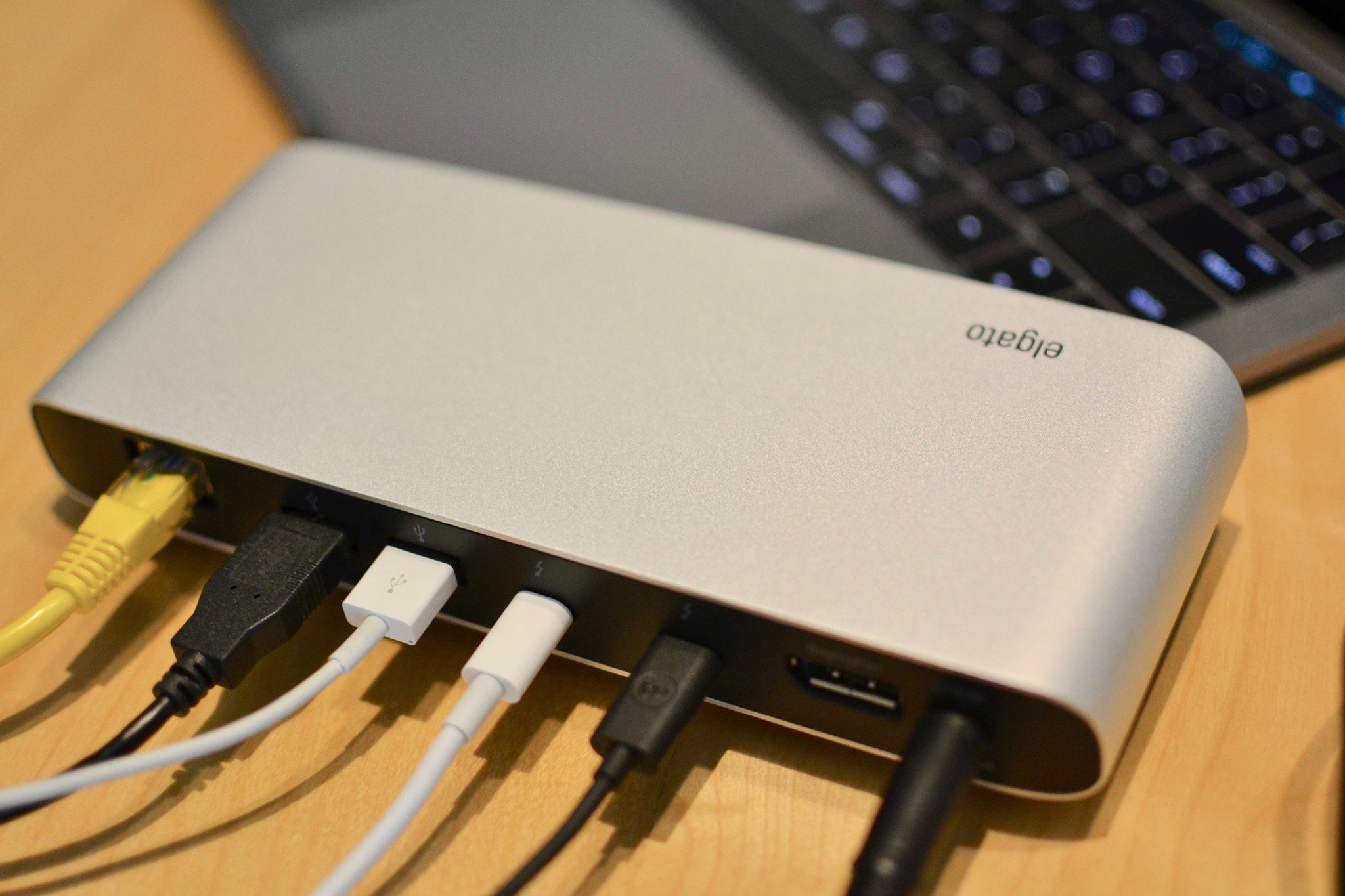
Some even support older or more esoteric protocols, to ensure a device you have from years ago will work on today's hardware: It was easy to find USB-C–to–DVI adapters, for example, but we also came across one that split to two RS-232 serial connections. The good news, though, is that if you invest in a couple of normal USB-C cables (they range in price from $10 to $30), they will work with anything and everything that supports USB-C. That's a big step up from the situation of the recent past, where pulling a mini USB cable out of your bag to charge your micro USB–equipped phone was almost as useless as grabbing a Nokia Pop-Port or Sony Ericsson charger. Docking Procedures Have only one USB-C port? Don't fret, as there are now multiple available, both from PC manufacturers like Dell and HP, and third-party accessory makers like Belkin, Caldigit, and OWC. These docks can recharge your laptop, give you access to extra ports including Ethernet, HDMI, USB 3.0, and VGA, and add support for multiple monitors. Do You Need USB-C?
The presence (or absence) of a USB-C port is increasingly becoming a consideration when buying a PC. If you buy an ultrathin laptop, it will almost certainly have a USB-C port, which will catapult you into the ecosystem automatically. If you're more of a lover of desktops, you're almost certain to find the ports there, too, particularly on high-end. In a few years, USB ports using the old Type-A style connector will be much harder to find—and who'll want to put up with their sluggish speeds at that point, anyway?
Even if you don't need USB-C now—and since even power users probably don't have much hardware that can fully task it, especially if Thunderbolt 3 is involved—you will before long. We're only scratching the surface of what USB-C can do, but one thing is certain: The next generation of cross-platform connectors is quickly replacing the old guard just as the original USB standard replaced Apple Desktop Bus (ADB), FireWire, parallel, PS/2, SCSI, and serial ports on Macs and PCs. USB-C truly is one port to rule them all.
Starting with the 12-inch MacBook in 2015, Apple started moving its MacBook line to USB connectivity. The MacBook Pro made the switch in 2016, and now there are a host of USB-C portable batteries that are capable of not only recharging your iPhone and iPad, but also your MacBook. One thing to note here is that one accessory you’ll definitely want to pick up for iPhone and iPad charging is a USB-C to Lightning cable. Apple offers its own first-party cable, while several other third-party options exist:. The best USB-C power packs for iPhone, iPad, and Mac Anker PowerCore+ The features a 26,800 capacity with 30W USB-C support, as well as two traditional USB-A ports.
 Thanks to Google chrome,webkit browsers are being released almost every week and one such browser for Mac OS X available for download is Stainless.
In addition to the battery pack itself, you also get a 60cm USB to USB-C cable, a 60cm Micro USB cable, and a 90cm USB-C to USB-C cable. Our own Ben Lovejoy that the Anker PowerCore+ is powerful enough for adding some power to a 15-inch MacBook Pro. Meanwhile, it is capable of fully recharging the less power intensive 12-inch MacBook. The and has a 4.5/5 star rating from hundreds of Amazon shoppers. Read. RAVPower 26800 Similar to the Anker PowerCore+ is. It features 26800 of power and two USB-A ports and two USB-C ports. It supports the 12-inch MacBook as well as any smartphone on the market with its 30W USB-C output.
You also get two microSUB cables, a microUSB to USB-C adapter, and a carrying pouch. The on Amazon, with a 4.5/5 start rating from over 1,000 shoppers. RAVPower also offers a more. Aukey Aukey offers one of the more versatile USB-C charging packs on the market. With 20,000mAh of power, the features three USB-A ports, one USB-C port, one microUSB, and one Lightning input. The Lightning input is especially notable as it allows you to recharge the power bank using a traditional Lightning cable.
On Amazon and has a 4.5/5 star rating. Mophie Powerstation USB-C XXL One of the top choices in terms of USB-C power packs is the Mophie Powerstation XXL. With 19,500mAh of power and 30W output, Mophie says its Powerstation XXL can extend MacBook battery life by 14 hours, while it can also add over 60 hours of battery life to iPhones. You pay a bit more for the Powerstation USB-C XXL than you do other options, though. The device is. Mophie Powerstation AC Mophie also offers the Powerstation AC, which features USB-C, USB-A, and a traditional AC port.
With USB-C, the Powerstation AC outputs 30W, the AC port is capable of pushing 100W of power. Mophie says you can fully recharge a MacBook or add up to 100 hours of life to a smartphone.
The Mophie Powerstation AC is. Read our full. Mophie Powerstation On the lower-end of the market, Mophie offers its. It features 10,000mAh of juice and outputs at 15W through USB-C, so you do miss out on some of the power of the XXL model. However, the, so it could be a solid choice if you’re only looking to power an iPhone or iPad.
Tronsmart Presto One of the most affordable USB-C power packs on the market comes from Tronsmart. Its offers 10,400mAh of juice with USB-C output at 15W. While it’s not the most powerful option on the market, it’s hard to. Wrap up These are some of the top portable batteries for iPhone, iPad, and Mac. As you can see, they can vary wildly in price, but it ultimately comes down to the power each one offers, both in terms of capacity and wattage. Do you have a favorite portable battery pack?
Usb-c Hub For Macbook
Let us know down in the comments!