How To Make Ishikawa Diagram Amazing Fishbone Diagram
The Fishbone Diagrams solution extends ConceptDraw PRO software with the ability to easily draw the Fishbone Diagrams (Ishikawa Diagrams) to clearly see the cause and effect analysis and also problem solving. The vector graphic diagrams produced using this solution can be used in whitepapers, presentations, datasheets, posters, and published technical material. Follow us on Social Media: Twitter: Facebook: Pinterest: Instagram: Check out our YouTube channel for more tutorial videos. If you need more information about ConceptDraw products, please feel free to contact us here: support@conceptdraw.com.
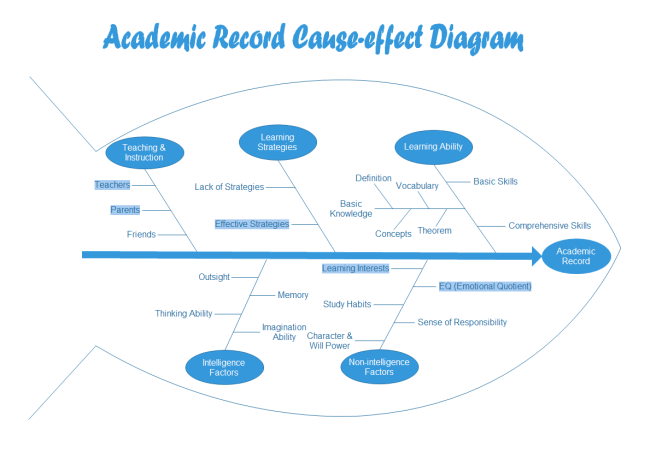
Ishikawa diagram One of the First described by Purpose To break down (in successive layers of detail) root causes that potentially contribute to a particular effect Ishikawa diagrams (also called fishbone diagrams, herringbone diagrams, cause-and-effect diagrams, or Fishikawa) are created by that show the of a specific event. Common uses of the Ishikawa diagram are and quality defect prevention to identify potential factors causing an overall effect. Each cause or reason for imperfection is a source of variation. Causes are usually grouped into major categories to identify and classify these sources of variation. Sample Ishikawa diagram shows the causes contributing to inferior coffee being brewed The defect is shown as the fish's head, facing to the right, with the causes extending to the left as fishbones; the ribs branch off the backbone for major causes, with sub-branches for root-causes, to as many levels as required.

Ishikawa diagrams were popularized in the 1960s by, who pioneered quality management processes in the shipyards, and in the process became one of the founding fathers of modern management. The basic concept was first used in the 1920s, and is considered one of the of.
It is known as a fishbone diagram because of its shape, similar to the side view of a fish skeleton. Famously used an Ishikawa diagram in the development of the sports car. Root causes.
This section does not any. Unsourced material may be challenged. (March 2018) is intended to reveal key relationships among various variables, and the possible causes provide additional insight into process behavior.
The causes emerge by analysis, often through brainstorming sessions, and are grouped into categories on the main branches off the fishbone. To help structure the approach, the categories are often selected from one of the common models shown below, but may emerge as something unique to the application in a specific case. Each potential cause is traced back to find the root cause, often using the technique. Typical categories include: The 5 Ms (used in manufacturing). See also: This common model for identifying crucial attributes for planning in product marketing is often also used in root-cause analysis as categories for the Ishikawa diagram:.
Product (or service). Price. Promotion. Place. Process. People (personnel).
Physical evidence. Performance The 8 Ps are primarily used in product marketing. The 4 Ss (used in service industries) An alternative used for service industries, uses four categories of possible cause:.
Surroundings. Suppliers. Systems. Skill Fishbone Diagram in Lean A recurring theme in a lean or transformation is removing the clutter to reveal waste or opportunities for improvement. A fishbone diagram aims to break down and organise the Causes of an issue to reveal what elements have the greatest impact.
Grouping the “causes” means you can think about the different elements of the problem as separate from the overall process. One or two of these “causes” will have a greater effect than the others and will guide you to the root of the problem. This structure also allows you to tackle smaller chunks which have a large impact on the problem. Looking at elements of the problem and not the whole process will likely make finding your solution less daunting and problem solving more manageable. After you have determined your root cause, prioritise or screen the causes to determine which are having the largest effect. Once identified focus on these.
An easy Cause screening method involves looking at each one and asking two questions: How likely is this cause to be the major source of the issue or variation?. V - Very Likely. S - Somewhat Likely. N - Not Likely How easy would it be to fix or control?. V - Very Easy. S - Somewhat Easy.
N - Not Easy Put the answers of the two questions together. Work on the Causes that have a result of VV, VS, and SV.
See also. Ishikawa, Kaoru (1968). Guide to Quality Control. Ishikawa, Kaoru (1976). Guide to Quality Control. Asian Productivity Organization. Hankins, Judy (2001).
Infusion Therapy in Clinical Practice. Tague, Nancy R. The Quality Toolbox. Milwaukee, Wisconsin: American Society for Quality. Retrieved 2010-02-05. Frey, Daniel D.; 1943-, Fukuda, S. (Shūichi),; Georg., Rock, (2011).
Springer-Verlag London Ltd. Weeden, Marcia M. ^ Bradley, Edgar.
How To Make Ishikawa Diagram Amazing Fishbone Diagram Nursing
How To Make Ishikawa Diagram Amazing Fishbone Diagram
Dudbridge, Michael (2011). John Wiley & Sons. Retrieved 17 August 2017. Further reading. Ishikawa, Kaoru (1990); (Translator: J. Loftus); Introduction to Quality Control; 448 p;.
Creating A Fishbone Diagram
Dale, Barrie G. (2007); Managing Quality 5th ed.