Oxford Semiconductor Serial Pci Drivers For Mac
Hi, Does anyone have a few products that are known to work with ubuntu/linux? I need 4 RS232 ports in a PCI port (the old version). I only have one PCI port, but plenty of room for 2 brackets if needed. This is the one I have now 'Serial controller: Oxford Semiconductor Ltd OX16PCI954 (Quad 16950 UART)' Its detected and all ports added (and 4 too many), but I cant get it working, at one time I had it working but only about 10% of whats sent gets trough. Tried changeing baudbase based on forum advice found on google (1152000), also tried 900 as thats about 1/16 of the freq mentioned in the manual. I have changed boot to include 8250.nruarts=16 pci=nomsi,noacpi (the msi one is for the network card) The card is from 'MANHATTAN'.
Pci Serial Driver Windows 10
But if I can find one card that is known to work I will just replace it. Otherwise if you have an idea to get the card going, please let me know. Code: 04:00.0 Serial controller: Oxford Semiconductor Ltd OX16PCI954 (Quad 16950 UART) function 0 (Uart) (prog-if 06) Subsystem: Oxford Semiconductor Ltd Device 0000 Control: I/O+ Mem+ BusMaster- SpecCycle- MemWINV- VGASnoop- ParErr- Stepping- SERR- FastB2B- DisINTx- Status: Cap+ 66MHz- UDF- FastB2B+ ParErr- DEVSEL=medium TAbort- SERR- TAbort- SERR.
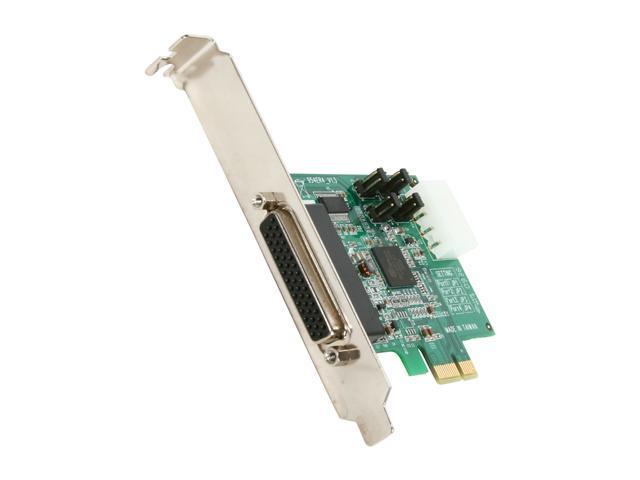
I needed a serial port on my primary computer in order to use an old serial scanner. I hate to throw perfectly good equipment away just because it's no longer 'supported' with more modern computers. I tried my USB-to-Serial cable that works for many of my other devices but it wouldn't work with the older software and drivers I needed for this scanner. This card solved my problem. It installed without an issue and was found by Windows 7 without a problem. I was then able to install the scanner software in a VM which could 'see' the new com ports. The scanner was found on the correct com port and I'm able to use it again.
I've had to return the card. For the technically inclined or interested parties: No support for FreeBSD. I needed a specific targeted application which is best suited for running on FreeBSD. If you need FreeBSD support, make sure you check /usr/src/sys/dev/pub/pucdata.c or /usr/src/sys/dev/uart/uartbuspci.c for support.
Make my mistake for forgetting to check the kernel for hardware support to your benefit. Card is properly identified under FreeBSD (you're able to enumerate the PCI bus and identify the card) but there is no driver to operate the 16C1050 UART. What is a 16C1050 UART anyways? I can't even find technical specifications for this chip. This means even if I wanted to modify the FreeBSD puc kernel driver, I couldn't because there are no published specifications for this UART to be found. This is not just this board but any board that was 'compatible with 16C550' or similar verbiage you'll need to exercise caution. This and similar boards which are found on Amazon.com should be avoided at all costs because they will require specific vendor drivers which tend to be undocumented and loose support across operating system upgrades.
Do yourself a favor and find yourself a native 16550A, 16650, 16750, or 16950 UART on board. Output from pciconf -lv: pcib3@pci0:2:0:0: class=0x060400 card=0x00000000 chip=0x10801b21 rev=0x04 hdr=0x01 vendor = 'ASMedia Technology Inc.'
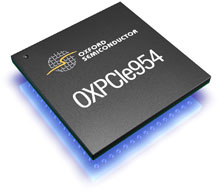
Device = 'ASM1083/1085 PCIe to PCI Bridge' class = bridge subclass = PCI-PCI none1@pci0:3:0:0: class=0x070002 card=0x4d0214a1 chip=0x4d0214a1 rev=0xb0 hdr=0x00 vendor = 'Systembase Co Ltd' class = simple comms subclass = UART I ended up buying a SIIG 2-Port RS232 Serial PCIe with 16950 UART (JJ-E02111-S1) which has the Oxford OxPCIe952 chipset in it. There is listed driver support for it and is found in both the uart and puc drivers of FreeBSD's kernel. It has two native 16950 UARTs on board. I've had to return the card.
For the technically inclined or interested parties: No support for FreeBSD. I needed a specific targeted application which is best suited for running on FreeBSD. If you need FreeBSD support, make sure you check /usr/src/sys/dev/pub/pucdata.c or /usr/src/sys/dev/uart/uartbuspci.c for support.
Make my mistake for forgetting to check the kernel for hardware support to your benefit. Card is properly identified under FreeBSD (you're able to enumerate the PCI bus and identify the card) but there is no driver to operate the 16C1050 UART. What is a 16C1050 UART anyways? I can't even find technical specifications for this chip. This means even if I wanted to modify the FreeBSD puc kernel driver, I couldn't because there are no published specifications for this UART to be found. This is not just this board but any board that was 'compatible with 16C550' or similar verbiage you'll need to exercise caution. This and similar boards which are found on Amazon.com should be avoided at all costs because they will require specific vendor drivers which tend to be undocumented and loose support across operating system upgrades.
Do yourself a favor and find yourself a native 16550A, 16650, 16750, or 16950 UART on board. Output from pciconf -lv: pcib3@pci0:2:0:0: class=0x060400 card=0x00000000 chip=0x10801b21 rev=0x04 hdr=0x01 vendor = 'ASMedia Technology Inc.' Device = 'ASM1083/1085 PCIe to PCI Bridge' class = bridge subclass = PCI-PCI none1@pci0:3:0:0: class=0x070002 card=0x4d0214a1 chip=0x4d0214a1 rev=0xb0 hdr=0x00 vendor = 'Systembase Co Ltd' class = simple comms subclass = UART I ended up buying a SIIG 2-Port RS232 Serial PCIe with 16950 UART (JJ-E02111-S1) which has the Oxford OxPCIe952 chipset in it. There is listed driver support for it and is found in both the uart and puc drivers of FreeBSD's kernel. It has two native 16950 UARTs on board. I needed a serial port on my primary computer in order to use an old serial scanner. I hate to throw perfectly good equipment away just because it's no longer 'supported' with more modern computers.
I tried my USB-to-Serial cable that works for many of my other devices but it wouldn't work with the older software and drivers I needed for this scanner. This card solved my problem. It installed without an issue and was found by Windows 7 without a problem.
I was then able to install the scanner software in a VM which could 'see' the new com ports. The scanner was found on the correct com port and I'm able to use it again. I had issues with my computer that I thought may be causing the card not to work, I called support they were helpful in confirming the unit worked through a loop back test but could not help further (as expected). I resolved my issues on my PC and got my hardware to work on the com1 integrated Port but it would not work on any of the startech ports. I called support to explain that my onboard com1 works with my machine but their unit using the same port settings and cable does not, their advice was for me to contact my hardware vendor. (Even though my computer com1, cable and machine work fine but does not with the startech unit) Too bad I really wanted this to work to replace my siig 2 port usb to RS232 and my ugreen usb to rs232 (all of which work fine).
We're sorry to hear that our ICUSB2324X did not work for your application. Looking into your other two adapters, they use ASIX and FTDI chipsets. Your best bet for a 4-port hub, in this case, would be a hub that uses an ASIX or FTDI chipset as well. Our ICUSB2324X uses a Texas Instruments chipset, which could explain why the adapters work but the hub doesn't. If you have any other questions, or would like help finding a solution with FTDI or ASIX chipsets please do not hesitate to contact us back. Nick, StarTech.com Support.
Initially purchased the Gearhead USB to serial converter from a local computer store, to use with my new Dell Inspiron 3000 PC running Windows 8.1. Should have checked reviews in Amazon first. The Gearhead unit came with a driver disk, and on the box it said it was Windows 8 compatible. Driver loaded with a Windows alarm in Device Manager, about insufficient virtual memory. Anyway, could not make it work. Returned to store. Ordered the StarTech adaptor from Amazon, recommended by Amazon users, and known to work with Windows 8.
 Using warez version, crack, warez passwords, patches, serial numbers, registration codes, key generator, pirate key, keymaker or keygen for tcm license key is illegal. Download links are directly from our mirrors or publisher's website, tcm torrent files or shared files from free file sharing and free upload services, including Rapidshare, MegaUpload, YouSendIt, Letitbit, DropSend, MediaMax, HellShare, HotFile, FileServe, LeapFile, MyOtherDrive or MediaFire, are not allowed!
Sure enough, when it arrived, plugged the USB end into my Dell and Windows discovered the driver automatically via Windows Update. Did not even need to load the driver from disk.
Worked perfectly, with my Dylos Laser Particle Counter, which only has a serial port. Now plotting particle counts on PC. Six foot cable with Startech adaptor is 6 feet long; important when monitoring counts in real time from the fairly large particle counter, and must set the laptop down somewhere nearby. This product has been a time saver. I install storage arrays for a living and these arrays have dual controllers that require a serial connection for initial setup. Being able to have a console session open to both controllers at the same time has saved me a lot of running back and forth to switch cable connections. This works flawlessly with Windows 10 Pro and has been field tested on Mac OS as well.
A perfect tool for installers of equipment with serial console connections. It also works just fine with Cisco and Dell roll-over cables as well as those Compellent SC4020 proprietary serial cables. I use serial ports to control several ham radios. I switched computers from an ancient (OK, 2002) XP desktop that had a 4-port serial card to a new system running Windows 7. I was concerned about switching the OS and computer at the same time - I hoped everything would work. The installation was problem-free and the serial card works great with both radios along with the software I use (which also upleveled). I was able to use the dual connector configuration, but it's nice that StarTech includes the lower profile brackets too.
No complaints, it works very well and I plan on picking up a 2nd card to add in some more radios.